



Site Conditions for Septic Tank Installation: What You Need to Know Before Delivery
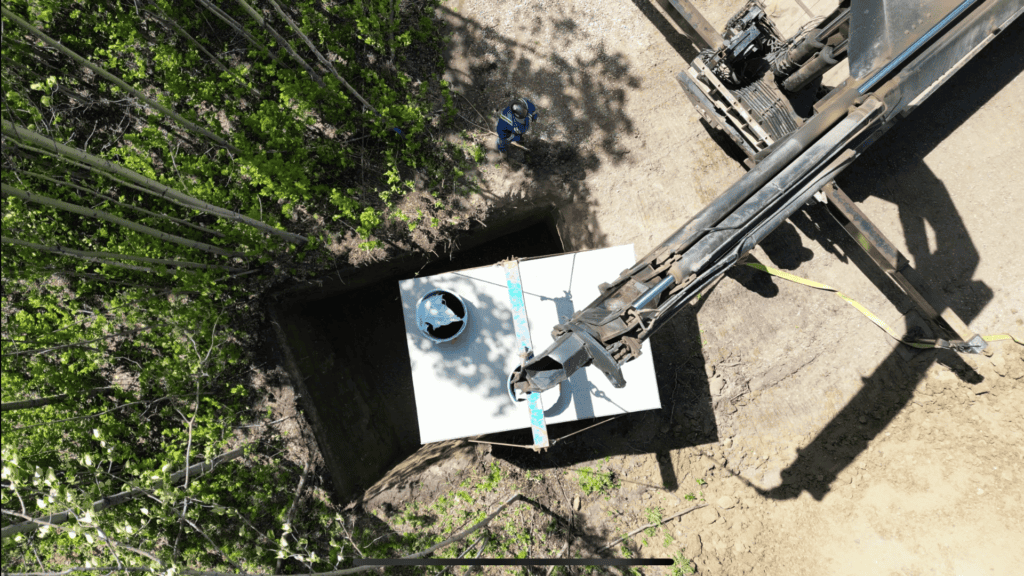
Proper site preparation is one of the most important steps in a successful septic tank or cistern installation. Without the right conditions, even a high-quality precast concrete tank cannot be delivered or installed safely.
Planning ahead will save time, prevent delays, and avoid additional costs.
Why Site Preparation Matters
Before your tank is delivered, you need to understand the exact elevation and measurements required for installation. This includes knowing:
- The distance from the bottom of the tank to the inlet opening
- The required sub-base elevation to properly align with the building sewer line
Accurate measurements ensure that the tank connects correctly and functions as designed.
Access Requirements for Tank Delivery
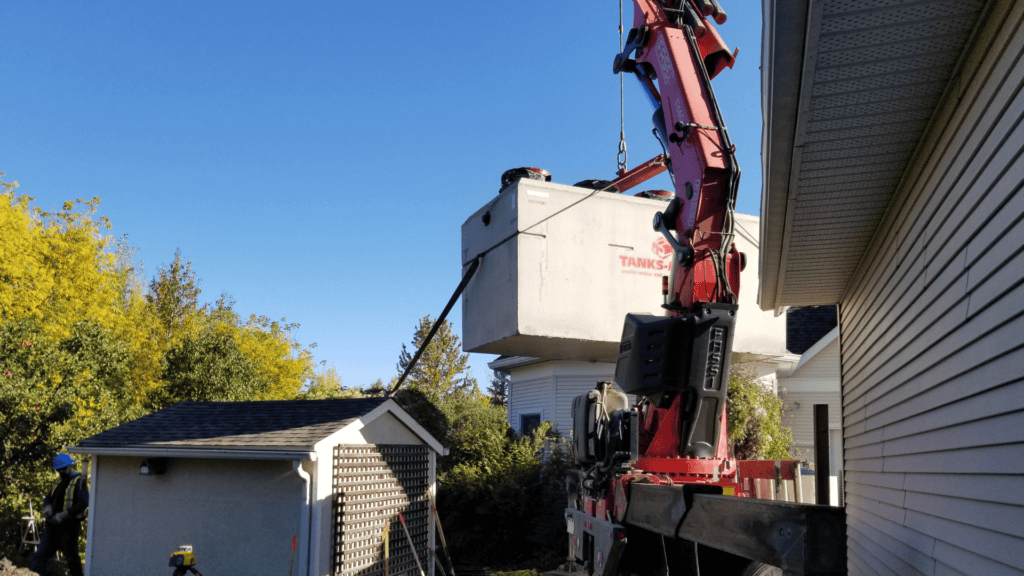
Septic tanks are delivered using large trucks and lifting equipment. That means your site must be accessible for heavy-duty vehicles (up to 60,000 lbs).
To ensure a smooth delivery, your site should:
- Be clear of trees, branches, debris, and obstacles
- Have no interference from overhead power lines or underground utilities
- Allow trucks to access the site under their own power (not towed or pushed)
According to site readiness guidelines, a clear path is essential, including:
- Minimum 17 feet of overhead clearance
- 17–20 feet of width for truck access and outriggers
Simple rule: If a school bus can safely access the area, a picker truck likely can too.
Space Requirements for Delivery and Installation
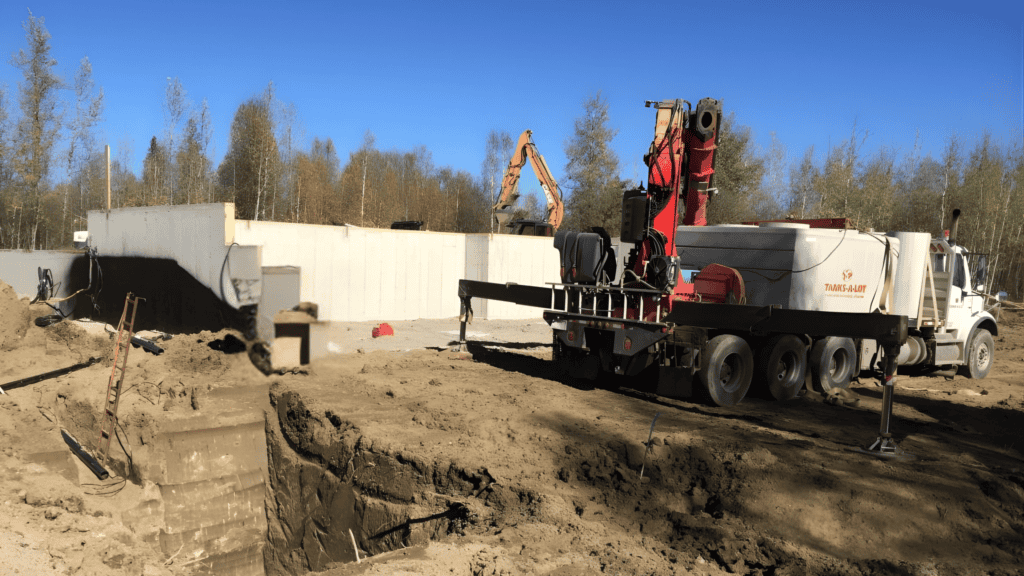
Delivery trucks need enough space not only to reach the site but also to safely unload the tank.
Typical requirements include:
- Ability to get within 3 feet of the excavation
- Approximately 30 feet of working space for crane outriggers
- A clear and stable area for positioning the tank
Without enough space, delivery may be delayed or require additional equipment.
Excavation and Hole Preparation
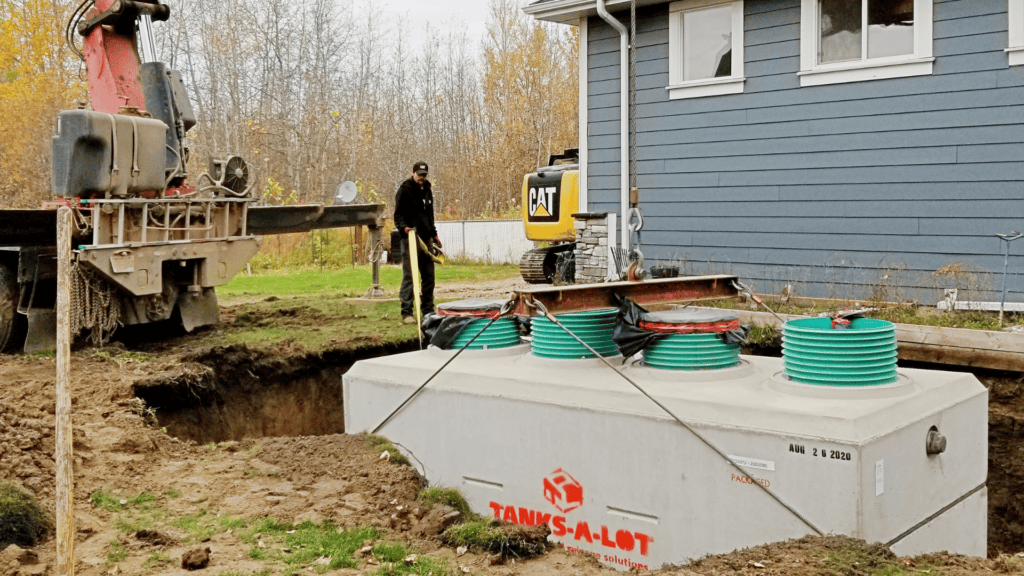
Before delivery, the excavation must be fully prepared.
Best practices include:
- The hole should be pre-dug and ready
- One side of the excavation should be open and accessible for the truck
- The truck must be able to back up directly to the hole without obstruction
Improper excavation setup is one of the most common causes of delivery issues.
Site Responsibility and Risk
It’s important to understand that the property owner or contractor is responsible for site conditions.
This includes any damage to:
- The site
- Delivery equipment
- The tank itself during delivery
Additionally:
- Most Precast concrete tanks are not designed for traffic loads
- They should not be installed where heavy equipment will drive over them
Common Mistakes to Avoid
Many delays and extra costs come from avoidable issues, such as:
- Narrow or blocked access roads
- Low-hanging power lines or trees
- Incomplete excavation
- Soft or unstable ground near the installation area
Planning ahead helps eliminate these risks.
Final Site Readiness Checklist
Before your delivery, make sure:
✔ Pathway is clear and accessible
✔ Minimum 17 ft overhead clearance is available
✔ Minimum 17–20 ft width is available
✔ Excavation is complete and accessible
✔ Truck can back up directly to the hole
Failure to meet these conditions may result in:
- Delivery delays
- Additional charges
- Rescheduling of installation
Need Help Preparing Your Site?
If you’re unsure whether your site is ready for delivery, it’s always better to confirm in advance.
Our team can help you:
- Review site conditions
- Confirm access requirements
- Ensure a smooth and efficient installation process
Contact Tanks-A-Lot today to make sure your project is set up for success.
FAQ – Site Preparation for Septic Tank Installation
How much space is needed for septic tank delivery?
Typically, you need 17–20 feet of width and enough space for a truck to safely maneuver and deploy outriggers.
How close does the truck need to get to the excavation?
Ideally, within 3 feet of the hole, with enough space for safe unloading.
What happens if the site is not ready?
Delivery may be delayed, rescheduled, or incur additional costs.
Can the tank be installed under a driveway?
Standard concrete tanks are not designed for traffic loads unless specifically engineered for that purpose.
Do I need to prepare the hole before delivery?
Yes — the excavation must be fully prepared and accessible before the truck arrives.