



How to Tell If Your Septic Tank Is Leaking (Signs, Causes & What to Do)

A leaking septic tank is not always obvious — but the consequences can be serious.
From groundwater contamination to drain field failure and costly repairs, even a small leak can quickly turn into a major issue.
So how do you know if your septic tank is leaking?
In this guide, we’ll walk you through:
- The most common signs of a septic tank leak
- What causes septic tanks to fail
- When a repair is enough — and when replacement makes more sense
What Is a Septic Tank — and Why It Must Be Watertight
A septic tank is an underground concrete structure that collects wastewater from your home.
It works by separating:
- Solids, which settle at the bottom
- Liquids, which flow out to the drain field
For this process to work properly, the tank must be completely watertight.
If it’s not:
- Wastewater can leak into the surrounding soil
- Groundwater can enter the tank and overload the system
- Your drain field can become saturated and fail
In climates like Alberta, where freeze-thaw cycles and soil movement are common, maintaining a watertight tank is even more critical.
Signs Your Septic Tank May Be Leaking
1. Unusually Low Water Level
One of the simplest ways to detect a leak is by checking the water level inside the tank.
- A normal level is typically 8–12 inches below the top
- If the level is significantly lower, it may indicate that wastewater is escaping
This is especially important if:
- The tank hasn’t been pumped recently
- Your household water usage hasn’t changed
A consistently low level is one of the strongest indicators of a leak.
2. Mid-Seam Tank Failure (Common in Older Systems)
Many older concrete septic tanks are built in two sections joined at a mid-seam.
Over time:
- The seal between the halves can deteriorate
- Cracks or gaps can form
- Wastewater begins to leak into the surrounding soil
This type of failure is common in older installations and can be difficult to repair permanently.
In many cases, replacement is more cost-effective than repeated repairs.
3. Leaking Inlet or Outlet Pipes
Not all leaks come from the tank itself.
The inlet and outlet pipes are also potential weak points:
- Seals can degrade over time
- Soil movement can shift connections
- Small leaks can develop around joints
Signs include:
- Slight drops in water level
- Wet or soft soil near pipe areas
- Changes in system performance during water use
The good news: pipe-related leaks are often repairable if caught early.
4. Groundwater Intrusion
Sometimes the issue is reversed — instead of leaking out, water is leaking into the tank.
This is more common in:
- Areas with high groundwater levels
- Spring melt or heavy rain conditions
How to check:
- No water is being used in the house
- Yet water continues flowing through the outlet
This indicates that groundwater is entering the system, which can overload it and reduce efficiency.
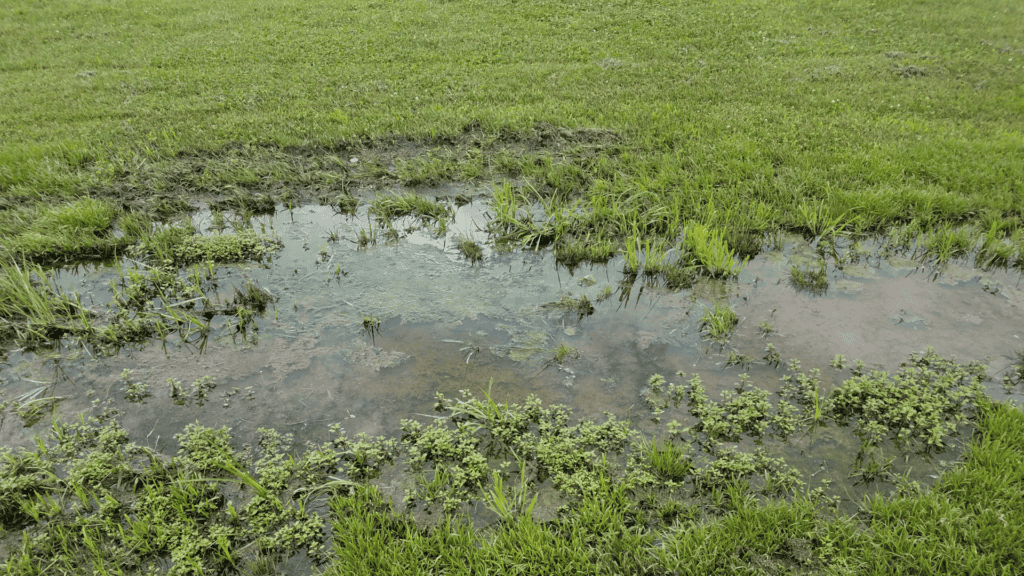
5. Wet Areas or Odours Around the Tank

In some cases, you may notice:
- Damp or unusually green patches of grass
- Persistent sewage smells
- Soft or sinking ground near the tank
These signs suggest that wastewater may be escaping into the surrounding soil.
What Causes Septic Tank Leaks
Understanding the cause helps determine whether you need a repair or full replacement.
Common causes include:
- Aging material degradation
- Failed seals at joints or seams
- Poor installation or outdated designs
- Soil movement or frost conditions
- High groundwater pressure
In Alberta, seasonal changes and ground movement can accelerate these issues over time.
How to Fix a Leaking Septic Tank
1. Sealing a Mid-Seam Tank
This involves applying sealants to the joint where the leak occurs.
- Can provide a temporary fix
- May not last long under pressure or movement
Best considered a short-term solution.
2. Repairing Pipe Connections
If the issue is at the inlet or outlet:
- The area must be excavated
- Connections cleaned and resealed
- Proper materials (e.g., hydraulic cement) applied
This is typically a cost-effective and reliable repair.
3. Addressing Groundwater Intrusion
This can be more complex and may involve:
- Identifying entry points
- Sealing cracks or joints
- Improving drainage around the system
In some cases, additional site work may be required.
Repair vs. Replacement: What’s the Better Option?
While repairs can solve certain issues, they’re not always the best long-term solution.
You may want to consider replacement if:
- The tank is older (especially mid-seam design)
- Multiple leaks are present
- Repairs keep recurring
- You’re planning long-term property use
Modern precast concrete tanks are:
- Fully sealed
- Built to current standards
- Designed for long-term durability
In many cases, replacing an aging tank can save money over time.
Link to: Residential page
Anchor: “septic tank options for homeowners”
Don’t Wait — Small Leaks Become Expensive Problems
A leaking septic tank can lead to:
- Groundwater contamination
- Drain field damage
- Costly emergency repairs
Regular inspection and early action can prevent major issues.
If you notice any of the signs above, it’s best to have your system assessed by a professional.
FAQ: Septic Tank Leaks
How do I know if my septic tank is leaking?
Common signs include low water levels, wet areas around the tank, unusual odours, and inconsistent system performance.
Is a leaking septic tank dangerous?
Yes. It can contaminate groundwater, affect nearby wells, and damage your drain field.
Can a leaking septic tank be repaired?
Some issues, like pipe leaks, can be repaired. However, older tanks often require replacement for a long-term solution.
How often should I inspect my septic tank?
It’s recommended to inspect your system regularly and monitor for changes in performance, especially in older systems.
Need Help With Your Septic System?
At Tanks-A-Lot, we supply:
If you suspect a leak or are planning a replacement, our team can help you find the right solution for your property.
View our septic tanks and products
Contact us to discuss your project.